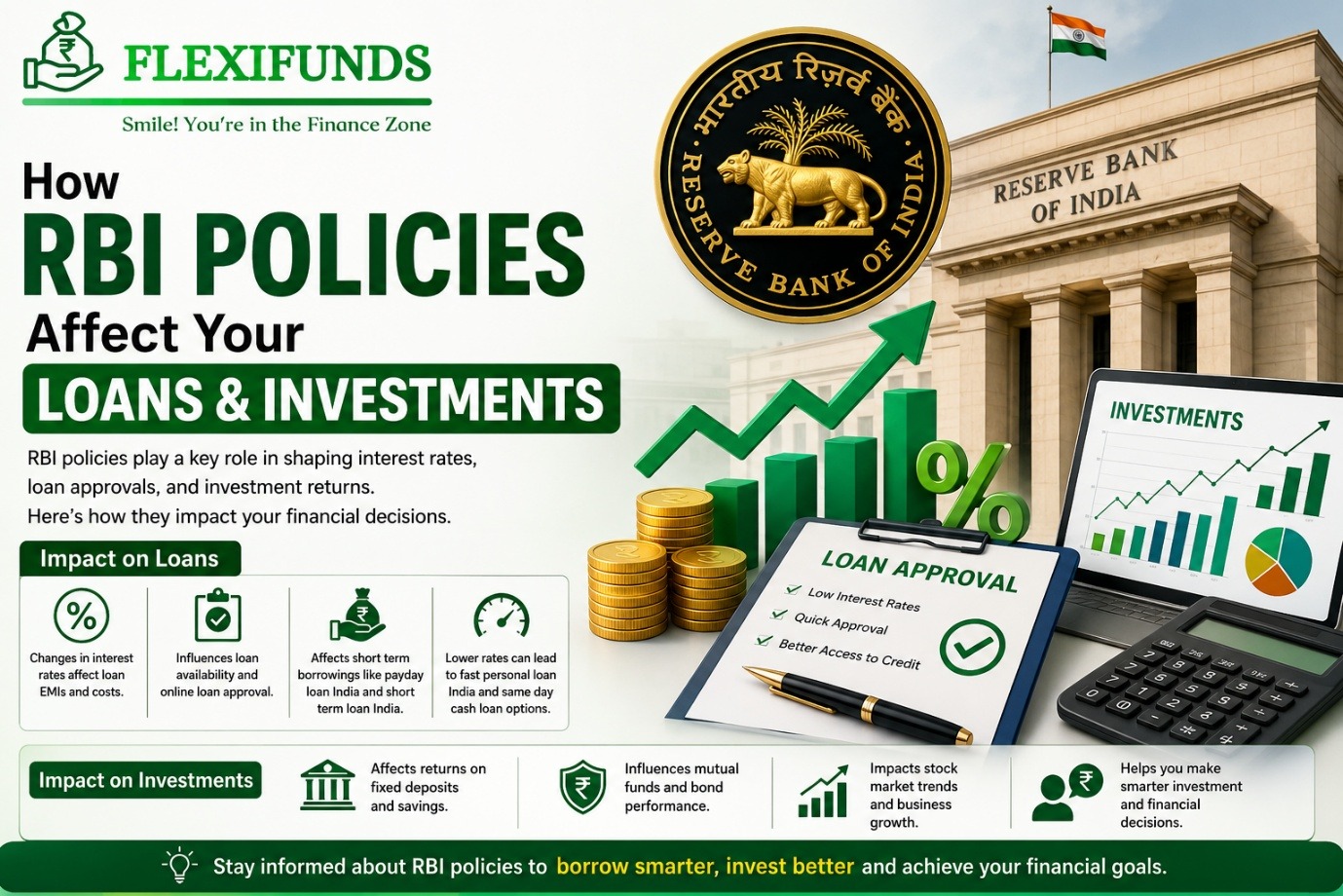
The Reserve Bank of India (RBI) plays a crucial role in shaping the country's financial system. Through various monetary policies, the RBI influences interest rates, loan availability, borrowing costs, and investment returns. Understanding how RBI policies work can help individuals make informed financial decisions regarding loans and investments.
What Are RBI Policies?
The RBI uses monetary policy tools such as the Repo Rate, Reverse Repo Rate, and Cash Reserve Ratio (CRR) to control inflation, manage liquidity, and support economic growth. Changes in these policies directly impact banks, financial institutions, borrowers, and investors.
How RBI Policies Affect Loans
1. Changes in Interest Rates
An increase in the RBI's repo rate makes borrowing more expensive for banks. As a result, lenders may increase loan interest rates, making personal loans and other credit products costlier.
On the other hand, when the RBI reduces the repo rate, banks can borrow funds at lower costs and may offer more affordable loan options, including an instant personal loan online and a fast personal loan India solution.
2. Loan Approval and Credit Availability
RBI policies influence the liquidity available in the banking system. When liquidity rises, eligible borrowers may benefit from quicker loan approvals and easier access to credit. This can be particularly beneficial for individuals seeking an emergency personal loan to manage urgent financial requirements.
3. Impact on Short-Term Borrowing
Changes in monetary policy can also affect products such as payday loan India, short term loan India, and same day cash loan offerings. During periods of lower interest rates, borrowers may find more competitive lending options and flexible repayment terms.
How RBI Policies Affect Investments
1. Fixed Deposits and Savings
When interest rates rise, banks often increase fixed deposit and savings account returns. This benefits conservative investors looking for stable and predictable income.
2. Mutual Funds and Bonds
Debt mutual funds and bond investments are highly sensitive to RBI policy decisions. Interest rate changes can impact bond prices and overall investment performance.
3. Stock Market Performance
RBI announcements often influence market sentiment. Lower interest rates generally encourage business growth and consumer spending, which may positively impact stock markets over time.
Key Benefits of Monitoring RBI Policies
- Better understanding of borrowing costs
- Improved loan planning and repayment decisions
- Smarter investment allocation strategies
- Awareness of changing market conditions
- Enhanced financial decision-making
Conclusion
RBI policies significantly influence both borrowing and investing opportunities in India. Whether you are considering an instant personal loan online, seeking online loan approval, applying for a same day cash loan, or exploring investment options, staying informed about RBI policy changes can help you make better financial decisions. Understanding these developments allows borrowers and investors to manage their finances more effectively while adapting to changing economic conditions.